
I don’t own a gun and never will. I would much rather be shot then to ever have to shoot someone. This is called radical pacifism. It is difficult to see the violence we commit everyday to ourselves and to others. The tearing at the seams. We cannot see the person and see only the outline, the abstraction. But this is all an illusion. Groups do not exist. There is no tribe. I promise you, by probability and chance alone, that we will live this same life forever and ever. We will live with each other forever. Murder is absurd in a world of infinite possibilities and finite construction. We do not see this in a world governed by mathematical laws. So, if we cannot escape this hell then we will just have to create heaven here together. It’s hard work. But we have all the time we need to get it right. Know hope.
History Lesson
 It’s a truism in political arguments that equating something to fascism puts you on a slippery slope. Let me go skating on ice, lest we think that fascism can never come to America.
Trump is a menace and a threat to democracy. The idea that he can be contained has eerie echoes of Germany on the eve of electing the greatest madman in the world. Hitler was elected in a coalition govt. and Von Papen too was somehow supposed to hold Hitler in check. So what happened?
Germany was not a proto-fascist state before Hitler rose to power. The Weimar was a Presidential Republic. It gave us art, expressionism, nudism, vegetarianism, socialism very liberal stuff. The problem is it had very little support. And this is where history becomes instructive to me. Our respect for the government, civil institutions and political processes are at the lowest they have ever been, and keep heading lower. There is so little respect because we have ratcheted party politics and fratricide to an unprecedented level. The system is under attack from all direction. Revolution is in the air, on both sides. Isn’t this good? Shouldn’t the system fall?
Call me a pessimist (I prefer realist) but I do not share this faith in the separation of powers to constrain our madman Donald Trump. And the reason I don’t have faith is because every day these wise constraints are coming undone. Political discourse has descended into bar fights. Congress members can’t even stand to be in the same room together. People are shut off to other points of view. We have built up a permanent echo chamber, reified, unthinking, founded on blind rage rather than principle. The courts are blatant and naked in their ideology. Tell me there are 2 democrats and 1 republican judge and I lay good money the decision is going to be 2-1. This cynicism is so ingrained so normal that exceptions like the Roberts decision on Obamacare are truly shocking. Presidents no longer feel constrained to bother with Congress when it comes to the conduct of War, and Congress green lights anything anyway, too weak to stand up and reassert their constitutional authority. Our nation, in short has lost respect for American Democracy.
So Trump will be held in check. And I ask, when is our Reichstag fire coming?
Misanthrope
I love you. I never heard those words. I would haven given money away just to hear them. Just to throw money away. I would have bet it all on the table. Because they bury you, they suffocate you, they murder you in increments. But they never fill you up. So tired of being a hole. Being the dump. So they lie. So fucking what? Everyone does. This is their secret. But here’s my final secret, and my revenge on a world that never loved me or desired me. I hated everyone.
Poppa’s War
 I have finished reading my mother’s great novel Poppa’s War. One is already predisposed to like an author, I suppose, without being related to them by birth. Either by word of mouth, reputation, or perhaps an intriguing title is enough to cause us to choose one author over another, zero sum. Rarely does one come to a book without preexisting feelings. Is this enough to shape our enjoyment of a book?
Perhaps. But there are other parts of judgment that make one feel they are on much firmer ground. Enough to make me confident to call this an amazing work of art, which is a triumph all its own, without feeling particularly biased in my opinion. It is crafted with painstaking, and exquisite detail, alive with vivid description. If the book were a ballet it would alternate between slow and fast movements through a shifting landscape. Each step is built upon the next. The message is clear and unmistakable. Something important is happening here and the details are where we must look to find the answers.
Life at the time (the 1940s) was far more involved in the minutiae, less automated than our responses and feelings are today. Washing dishes was then an experience. Today it is a simple task, pushing a button before you go to bed. You are there with Alicia every step of the way. This is life, the way it is truly lived and experienced, and it breathes across the page. There is an eternity found within the fleeting moment that most of us overlook but does not escape her inspired prose. This is what you look for, but rarely find in a novel, when the ordinary reveals its sacred and lyrical quintessence, and transcends words themselves.
I find myself, returning and retracing these steps to find deeper connections within the rich tapestry. It works like the movement of involuntary memory, coming alive in ways we don’t initially understand but discover later on there was a profound wisdom to be found in the trace. No single element should be overlooked or lost, for it is within the whole that we find its true meaning. Something in life demands transcendence, love, sexual awakening, the transformation of adolescence to adulthood, family, community, country. The tragedy is not that these things fall apart but that we are unable to realize how strong those bonds are, too late to save some of us in time. But, like a solemn prayer, the book insists they must survive and outlast us in another way.
In this, the book reminds me so much of Proust, not in terms of style or similarity of prose, but in the way it evokes within the reader the experience of being fully conscience. A story that is truly a poem.
On Sunday, May 15, we honor this great achievement as a loving family at the book launch party, appropriately held at the Museum of Natural History in Murfreesboro, Tennessee beginning at 5 pm. I am her son. I am proud of her. But my respect for this novel, Poppa’s War, and all her year’s of hard work, dedication, inspiration, genius and insight, is from one professional to another. From this book, I learned more about writing. This is my greatest takeaway and gift fom a story that will now live on inside my heart.
Journey to the End
 I’ve hit a good stretch, several breakthroughs on the Chou novel. So my blogging schedule has been allowed to slide. Find me writing here a lot and this means inevitably I’ve hit a snag. This is called “taking time to process the story”.
Breakthrough implies the journey is filled with any number of pitfalls, traps, obstacles, and (moral) hazards. This is usually what is meant by “bringing the story together.” For me, it is like solving smaller mathematical puzzles embedded in a larger one. I can never see it until I arrive at the end.
I don’t claim this is the proper or best way to write. I think it’s quite possible to have a good sketch of the complete story in mind prior to execution. That’s just not my style. Not right now.
But for me, writing is a journey. And so it happens, I am reading Journey to the End of the Night by that “absolute bastard” and “despicable human being” Celine. Immintely readable, it’s hard to put down. And hard to look away from the unrelenting critique of human existence. Rarely has misanthropy been so damn enjoyable.
Still, I don’t profess to understand how a great author can turn into a virulent Pro-Nazi anti-Semite. For me, the ends of the world exist at the edge of his novel. Looking beyond into the abyss of an angry soul is pure speculation.
Take, for example, the fact that he was a doctor. Did this shape his unremitting diagnosis of what’s “wrong” with the human condition? Perhaps. It is easily for an obsession about one’s health to devolve into a phobia for germs and diseases, into a pathological need to cleanse the body and rid the soul of infections and contaminations. Did this lead to his support of racist, Anti-Jewish policies? Is this why he was found within Fascism the power of elixir?
Pure speculation. I am not his biographer or psychologist, and would never wish to be.
We can sympathize with the voice of a novel, but must bear in mind that this is not the author, despite what all reason and common sense tells us. I assure you, as a writer you should reject authorship.
Anonymity is vital. We square the novel, by removing all traces of the “authentic” author. We must, for then only famous people could write books that we understand. Illuminate the history in which a novel is created, fine. But the author is truly a dead weight to the whole enterprise of writing and reading and should be quickly kicked overboard. It gets in the way. Do we need to take a moment outside the creative process to voice once more our disgust at his indefensible politics? Very well. But Celine is a symptom. Keep that in mind lest we think we have advanced the cause of equality and freedom one bit.
Otherwise, we don’t have a story, but pedagogy, moralism, and the tediousness which Celine exploited with great effect.
Counter-Narratives
The challenge of writing a piece of historical fiction is the tendency (or perhaps fear) to get the history wrong. The journey barely begins and already you are stuck. Choices become petrified, ossified. To speak in the language of science, you have no vector. Which way did this go? Can it go? I can’t explain.
The first instinct is for research. But a tool can quickly become a crutch, a way of thinking without imagining. Historical thinking. Recreating the space of history, edification without the need for a story to emerge. Your story.
Is it from a fear of getting things wrong? Or a desire to speak in another voice, to become the muse and let the oracle of history speak through you?
The challenge is made harder when you are forced to think and breathe in a completely unfamiliar landscape, a different language, a different organizing principle. And I don’t mean because Chou is set in the Middle Kingdom. Because that’s not actually true. My challenge is writing a story that exists between the gaps of history because this is really where Chou exists.
When asked to explain what the book is about, I say it is a story about a Chinese philosopher set in Ancient Times. All of the problems alluded to are contained in that misleading description. Ancient Times is such an expansive terms covering 3000 years of history up to the present which continues to be haunted by this ancient metaphysics.
I offer no solutions because the problem is history. The most radical stance, the most revolutionary and therefore fully conscience act of defiance is to will into existence the counter-narratives upon which history is built and also excludes. To reintroduce the contingent, the accidental, the nonlinear, the daring, discrete, unstable broken up ground of history not the smooth, continuous arc of deterministic history. History not as a cure but as a disease, and writing as the virus.
This arc is almost here. This is our time. We are entering it whether we want to or not. Very soon this Chou virus will be unleashed upon the world. The arc is almost here. But I fall back doubting unclear. History – cure, crutch, cancer.
Read Between the Deadlines
Hiatus. An opening or a gap, or better yet – a gape. There are two kinds of breaks from writing, one within, and one without. Why only two? Because I can think only in twos, one good and one bad, because I think only in dualities. Without, one stops writing altogether. Within, one suspends writing One thing to take up another. I would count reading a novel in this second category. The enjoyment of reading another author is a gratifying form of plagiarism.
Within writing, the hiatus can be either good or bad. It is good if the compulsion is driven by all the wrong reasons, that is to say, done out of sheer boredom, laziness, or hating what one had been working on.
It is bad if done for all the right reasons, that is to say, by the need to set goals and hit deadlines, setting aside a Ulysses, as it were, in order to finish a book report. I don’t mean that one is grander than the other. Rather, it is where one’s inspiration lies. Ulysses is inspired writing. The other is sometimes necessary to put food on the table.
It is why deadlines are essential to writing and also a nuisance and often a hindrance. But essential, nonetheless.
My latest gap (a week or so) came at the expense of my blog for the benefit of my novel. The good kind of hiatus. But, a self-imposed deadline made me feel the need to post SOMETHING. Bad hiatus. So keep it simple and to the point, and get back to the good stuff. Simple, something that seems to escape me, chasing those lines that I have yet to find.
The deadline achieved, I can safely turn back to inspiration till the next book report is due.
Reading History
History forms our opinions about the future. But history, reading the signals of history, is depressing. It is depressing for it is immediately clear that our future is doomed. Not in the sense that we are bound to die, though I am not entirely convinced we do die because I have learned over the years not to trust my eyes. No, we are doomed because there seems to be no way off this inertial path of self-destruction we are on, hurtling towards greater degrees of war, murder, rape, genocide, holocaust, extinction. We haven’t changed. We’ve just gotten better at it.
Historical reasoning (reason and judgment) has limited effect in averting our fate. Each solution applies a new level of inhumanity. Take the examples of the mita, the encomienda, the repartimiento – each was introduced and tailored to specific historical conditions. Each was intended to solve the same problem: how a small elite could best enslave the masses. The trajectory of these decisions, the ugly reality of institutional drift and path dependency, doomed Latin America to poverty, failed institutions, political corruption, and civil war up to the present day.
A man wakes up caught in another man’s dream. This living nightmare.
If we are to be honest about this history, if we were to apply the same standards of reason and objectivity to these lessons learned and apply them to our current world, then we must conclude that we are in hell. Not in some metaphorical sense, but an actual, concrete, living breathing look around you right now and see you are in hell kind of hell, replete with suffering and torment unrelenting. Not hyperbole, a true hell, Devils and all. If hopelessness is a fundamental condition, if the will to murder, to enslave, to rule as lord and master over another body and soul is a result of our humanity, then truly we are in hell. It is inescapable. This is our historical understanding.
We cannot let this unsettling thought, this disquieting feeling persist. So we cling to a delusion that we are near the time when we will finally escape from this nightmare. And so we are just as guilty as our ancestors of an enchanted world. They believed in Gods. We believe in progress. That moment of salvation will not come. Not yet, not until we become fully aware that we are dreaming. The first step is to awake from hell.
A Picture
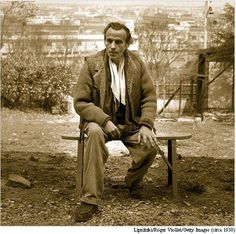
The picture under my bio is my favorite of me. I like it because it was one of those rare moments in photography capturing a moment of my personality. Free, wild, funny, playful, contemplative, dreamer. Most of the photos of me, I don’t recognize the person smiling with that painful contorted expression known as the pose. It takes talent not to pose, to dream of something else, to be far away but present. Portraits are for Dreamers, Gods, and Kings. Everything else is fashion modeling.
I like the picture so I use it. I keep thinking I should get a professional photo taken, but will be unhappy with the results. Have I changed all that much in appearance? Why should that matter?
I have used the photo as my profile image on some of those dating websites. It turns out the photo was a source of my success and failure. The complaint, often read, is that a person should use an up to date photo. False advertising. It’s amusing but also sad. The surface, the superficial is the thing most desired: but that’s not how you look now! No, but it’s how I am. I am every bit that person captured in the photo and more. One would find that out if they spent time with me.
Desire and attraction – the only glue that binds us, always receding into the past. It is easily unraveled at the first sign of adversity. The inevitable crisis. We love only after that crisis. Survival forces us to the depths, to find love. Unraveling love is a much harder feat. It requires some deeper cleaving that manages to kill what had once survived together.
It confirms my belief that we do not truly age. Or rather, what we call aging is simply the unraveling / revealing of the past, not the movement of time forward. We have no future, only history. It can’t be otherwise. Otherwise, and we are left with infinities, the absurdity that a body is destroyed each second it passes through time. It leaves no possibility of survival. It is why we have a physics of motion, but no physics of the substructure of that movement in space-time, not yet anyway.
The picture is the only proof I have of this concept. Not an erasing. Not an elegy, but a living breath. We are not spread across time but linger forever inside its harmonics. We take a superficial view and see in time only death, the killer of souls. We must go deeper, survive this impression of ourselves forever dying. Only then can we build something that endures.
Libertarianism
Somewhere down the line, I would like to do a larger treatmeant on the works of Robert Nozick, Milton Friedman, et. al. I am struck by the curious tendency in a certain strand of Libertarian thought to start off on shaky ground. Perhaps it has something to do with the need for first assumptions. Whatever the reason, these arguments quickly break down when they confront that monster of all political doctrines known as reality.
Take the observation that individuals should be treated as autonomous, self directing, self reliant beings, capable of making decisions as consensual beings. At first blush, there seems nothing objectionable about this, although it is unclear what we are to do with this suggestion. For straightaway it is apparent that whole swathes of people do not fit this categorical definition – children, the mentally and physically incapacitated, the special care needs of the elderly, the infirm, the dying in need of hospice. The ideal is forced to confront the undeniable realities of pre-existing social, economic and biological injustices built into a historic process. It is useless to try and make individual autonomy the metric by which political systems are built because it excludes and prejudices in a way that the blind justice of Rawl’s attempts to resolve.
Thus Nozick’s rather curious decision to redistribute and remedy injustices ex ante the social contract. One could be forgiven for suspecting Anarchy, State, and Utopia is just a clever joke on Liberalism itself. The assumption, unstated, is that the true arc of any political order (it’s natural state) will necessarily lead to inequality and injustice. Any attempt to remedy and address these are as useless as returning to the Garden of Eden. Worse, they involve the same sorts of cruelty and violence – impounding property, state coercion, the redistribution of wealth.
I remain unconvinced, or rather these arguments, convince me that individual autonomy, well intended, is a useless starting point precisely because it presumes a given distribution of power when the point, after all, is how power is distributed in the first place.
 The Hack